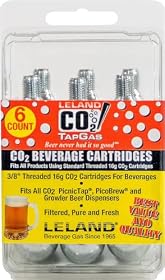
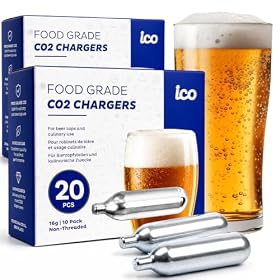
A mixed pack of 16g and 25g CO2 cartridges can cover road tires, wider gravel tires, and emergency repairs—but only if the cartridges match your inflator and the larger size fits your riding needs.
Buying 16g and 25g cartridges together
Buying 16g and 25g CO2 cartridges together makes sense when you ride more than one bike or want different inflation options for roadside repairs. A 16g cartridge is compact and often suited to a single road-tire inflation, while a 25g cartridge provides more gas for larger-volume tires or situations where you may need extra capacity. The exact result depends on tire size, starting pressure, temperature, and the inflator head.
Before buying a mixed pack, check the cartridge connection, physical size, and your inflator's instructions. A cartridge that cannot screw into or fit inside the inflator is not useful, regardless of its gram rating.
When a mixed-size pack is useful
A combination of 16g and 25g cartridges is practical if:
You ride both narrow road tires and wider gravel, touring, or mountain-bike tires.
You carry one cartridge for a routine flat and a larger backup for a bigger tire.
You ride in groups and may help another cyclist.
You want to carry a small cartridge on short rides but more capacity on remote routes.
You are still deciding which cartridge size works best with your tires.
If you ride one bike with a consistent tire size, buying one cartridge size is usually simpler and may cost less per emergency refill. A mixed pack is most valuable when your inflation needs vary.
What 16g and 25g mean
The number refers to the approximate mass of carbon dioxide in the cartridge, not a guaranteed tire pressure. A 25g cartridge contains more gas than a 16g cartridge, but it does not automatically inflate every tire to a specific pressure.
The amount of inflation you get depends on:
Tire width and air volume
Rim diameter
The pressure remaining after the puncture
Whether the tire has fully unseated from the rim
Ambient temperature
How efficiently the inflator releases the gas
A narrow road tire needs much less gas than a high-volume mountain-bike tire. A 16g cartridge may be adequate for many road-tire emergencies, while a 25g cartridge gives more margin for wider tires. For very large-volume tires, even a 25g cartridge may not provide a complete inflation to normal riding pressure.
Treat the cartridge size as an emergency capacity choice, not a substitute for checking the manufacturer's inflation guidance.
Product prices and availability are accurate as of the date/time indicated and are subject to change. Any price and availability information displayed on Amazon.com at the time of purchase will apply to the purchase of this product.
Check compatibility before buying
Threaded versus non-threaded cartridges
CO2 cartridges may use threaded or non-threaded designs. Your inflator must be designed for the same type. A threaded inflator generally requires a threaded cartridge, while a non-threaded inflator may use a push-fit cartridge or a cartridge held by a sleeve or housing.
Do not force a cartridge into an inflator. If the product instructions do not clearly support both 16g and 25g cartridges, choose the size and connection type specified by the inflator manufacturer.
Physical clearance
Even when two cartridges use the same general connection, the larger cartridge may not fit every inflator body, sleeve, cage, or frame-mounted holder. Check the listed cartridge diameter and length when available, particularly if the cartridge is stored inside the inflator or a compact repair tool.
This matters most with mini inflators that enclose the cartridge. An external threaded inflator may have fewer clearance concerns, but compatibility should still be confirmed.
Bare cartridges and insulated sleeves
CO2 cartridges become very cold during discharge. Some inflators include a plastic sleeve or insulated grip to reduce the chance of cold-contact injury. If yours does not, avoid holding the bare metal cartridge during inflation and follow the inflator instructions.
A sleeve designed for one cartridge size may not fit the other. Verify that any insulation or storage sleeve is compatible with both sizes in a mixed pack.
Product prices and availability are accurate as of the date/time indicated and are subject to change. Any price and availability information displayed on Amazon.com at the time of purchase will apply to the purchase of this product.
How many cartridges should you carry?
For a short ride close to home, one cartridge plus a manual backup pump may be enough. For a remote ride, consider carrying more than one cartridge if your repair plan depends on CO2.
A sensible approach is:
Narrow road tires: Carry a 16g cartridge if your inflator and tire setup are known to work with that size.
Wider gravel or touring tires: A 25g cartridge can provide more useful reserve capacity.
Mountain-bike tires: Check the inflator or cartridge manufacturer's guidance rather than assuming one cartridge will fully inflate the tire.
Group rides: Carrying an additional cartridge can help another rider, but do not rely on a single cartridge for multiple large-volume tires.
Always carry tire levers and a way to repair or replace the punctured tube or tire. CO2 only supplies inflation; it does not fix the puncture.
Product prices and availability are accurate as of the date/time indicated and are subject to change. Any price and availability information displayed on Amazon.com at the time of purchase will apply to the purchase of this product.
CO2 is an emergency solution, not a permanent fill
CO2 is convenient because it inflates a tire quickly and takes little space. However, it can seep through some tubes and tire systems faster than ordinary air. After you finish the ride, check the pressure and replace the CO2 with air using a floor pump or hand pump as appropriate.
If you use tubeless sealant, follow the sealant and tire manufacturer's guidance. Some sealants may be affected by CO2, so avoid treating a cartridge as a routine way to set or maintain tubeless tire pressure unless the product instructions allow it.
Manual backup pump for post-CO2 pressure adjustment
Product prices and availability are accurate as of the date/time indicated and are subject to change. Any price and availability information displayed on Amazon.com at the time of purchase will apply to the purchase of this product.
Mixed pack or one cartridge size?
Choose a mixed 16g and 25g pack when:
You have different tire sizes.
You want a compact option for one bike and a higher-capacity option for another.
You are unsure which size best fits your riding conditions and want to compare them.
You regularly ride with people using different tires.
Choose one size when:
You use one bicycle and tire setup.
Your inflator has limited cartridge clearance.
You prefer a simple, repeatable emergency kit.
You already know the cartridge size that can inflate your tire sufficiently.
Do not buy a mixed pack solely because the larger number sounds more powerful. Confirm that the 25g cartridge fits your inflator and that its extra capacity is useful for your tire volume.
Practical roadside-use checklist
Before relying on the cartridges, check the setup at home:
Confirm whether your inflator accepts threaded or non-threaded cartridges.
Check that both cartridge sizes fit the inflator and any protective sleeve.
Read the inflator instructions for installation and release control.
Confirm that your tire valve is compatible with the inflator head.
Carry a spare tube or tubeless repair equipment, tire levers, and a manual pump if practical.
Keep cartridges secured so they do not rattle against the frame or other tools.
During use, remove the punctured tube or repair the tire first. Keep your fingers away from the cartridge outlet and cold metal surfaces, and release gas gradually if the inflator provides control. Stop if the cartridge, valve, or inflator does not engage correctly.
Bottom line
Buying 16g and 25g cartridges together is a good choice for riders with different tire volumes or variable roadside repair needs. The 16g option saves space for lower-volume tires, while the 25g option offers more capacity for wider tires. Compatibility comes first: match the cartridge connection and physical dimensions to your CO2 inflator, and use a regular pump to restore the tire after the emergency.
FAQ
Can I use both 16g and 25g cartridges in the same CO2 inflator?
Only if the inflator manufacturer says it supports both sizes and the larger cartridge fits its connection, sleeve, or housing. Check both the cartridge type and physical dimensions before buying.
Is a 25g cartridge better than a 16g cartridge?
Not automatically. A 25g cartridge contains more CO2 and is more useful for higher-volume tires, but a 16g cartridge may be smaller and sufficient for many narrow road tires. The correct choice depends on tire volume and inflator compatibility.
Can one 16g cartridge inflate two bike tires?
It may not. Inflation depends on tire volume, starting pressure, and how much gas was lost. Plan around the manufacturer's guidance and carry enough cartridges for your repair needs rather than assuming one cartridge will handle multiple tires.
Do CO2 cartridges expire?
A sealed cartridge does not typically have a short working life, but inspect it for rust, dents, or other damage before carrying it. Follow the cartridge and inflator manufacturer's storage recommendations.
Should I leave CO2 in my tire after using a cartridge?
Use CO2 as an emergency fill, then check the pressure and replace it with ordinary air when convenient. CO2 can escape through some tubes and tire systems faster than air.