A floor pump gauge can read incorrectly because of a loose connection, a leaking hose or chuck, a damaged gauge, or simple calibration drift. Check the tire with a separate gauge before replacing anything, then inspect the pump in a sensible order.
A floor pump gauge reading wrong is usually caused by a faulty connection, a small air leak, a damaged gauge, or calibration drift. First compare the reading with a separate, trusted tire-pressure gauge. Then check the pump’s valve connection, hose, seals, and gauge for physical damage before deciding whether to replace a part or the entire pump.
Check the reading with another gauge
Do not use the questionable floor-pump gauge to judge whether it is accurate. Check the same tire with a separate gauge designed for bicycle tires, preferably one that fits the tire’s valve directly.
For a useful comparison:
Let the tire sit at a stable indoor temperature.
Check it with the floor pump gauge.
Remove the pump and check it immediately with the separate gauge.
Repeat the comparison at a different pressure if practical.
Small differences can result from pressure loss when removing a chuck or from gauges having different accuracy limits. A large, repeatable difference suggests that the pump gauge or its connection is not reliable.
Do not assume that the number printed near the top of the gauge is an accuracy rating. A pump’s maximum pressure and its measurement accuracy are separate specifications.
Inspect the valve connection and hose first
A poor connection can make the reading appear wrong even when the gauge itself is working.
Check the chuck
Make sure the pump head is fully engaged with the valve and locked according to the manufacturer’s instructions. If the chuck is crooked, loose, or difficult to lock, it may not seal consistently.
Look for:
A worn or missing rubber seal inside the chuck
A damaged Presta or Schrader opening
A chuck that leaks when the pump is disconnected
A connector that requires unusual force to attach
A valve core or valve stem that moves excessively
On a Presta valve, loosen the small valve nut before attaching the pump. On a Schrader valve, confirm that the pump head is set to the Schrader position if it has a selectable head. An incorrect setting can prevent a proper seal and produce confusing readings.
Check the hose
With the pump connected and the tire inflated, listen and feel for escaping air around the hose ends, pump head, and hose fittings. Cracks, bulges, or a hose that has pulled away from its fitting can cause pressure loss.
If the tire loses noticeable air as soon as the pump is removed, some of that loss may occur at the chuck. This can make the tire’s final pressure lower than the number you saw while pumping.
Product prices and availability are accurate as of the date/time indicated and are subject to change. Any price and availability information displayed on Amazon.com at the time of purchase will apply to the purchase of this product.
Check for a leaking or damaged gauge
Inspect the gauge body, its threaded connection, and the area where it joins the pump base. Do not open a pressurized gauge or try to recalibrate it unless the manufacturer specifically provides a safe procedure.
Signs the gauge may be damaged include:
The needle does not return to zero when the pump is disconnected
The needle sticks, jumps, or moves slowly
The gauge face or housing is cracked
The reading changes when the gauge is tapped
The gauge disagrees with a trusted gauge by a similar amount every time
The gauge was recently dropped or exposed to impact
A needle that does not return to zero is a strong reason to treat the reading as unreliable. Some gauges have an adjustable zero or a replaceable gauge assembly, but compatibility varies by pump. Use the exact replacement part specified for your pump rather than assuming that any threaded gauge will fit.
Product prices and availability are accurate as of the date/time indicated and are subject to change. Any price and availability information displayed on Amazon.com at the time of purchase will apply to the purchase of this product.
Confirm the pump setup and valve type
A pump may seem to read incorrectly when it is not configured for the tire valve.
Presta valves
Presta valves are narrow and usually have a small threaded tip. The tip must be loosened before inflation. If the pump head is not sealing around the valve, the gauge may show pressure from the pump head or hose rather than a stable tire-pressure reading.
Schrader valves
Schrader valves are wider and resemble automotive tire valves. The pump head must engage the valve pin correctly. A damaged or incompatible chuck may fail to open the valve fully or may leak around it.
Presta adapters
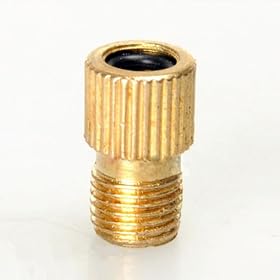
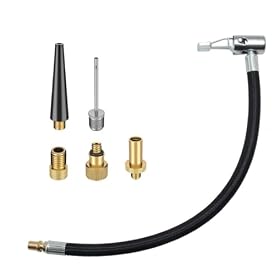
A Presta-to-Schrader adapter can add another sealing point. If an adapter is loose or its seal is damaged, it can cause air loss and inconsistent readings. If possible, compare the result using a pump head that supports Presta valves directly.
Product prices and availability are accurate as of the date/time indicated and are subject to change. Any price and availability information displayed on Amazon.com at the time of purchase will apply to the purchase of this product.
Check whether the tire or pump is losing pressure
A gauge reading can change because the tire is leaking while you inflate it. Apply a small amount of soapy water around the valve and inspect for growing bubbles. Do not immerse an electric or electronic pump, and follow the tire and valve manufacturer’s guidance.
Also check:
The valve core, if the valve uses a removable core
The valve-to-tube or valve-to-rim area
The tire bead and rim area
Tubeless rim tape and valve seals, if applicable
The pump chuck seal
A leaking tire does not normally make a healthy gauge read incorrectly, but it can prevent the tire from reaching the pressure you expect and make the gauge seem inconsistent.
Compare readings at more than one pressure
If the floor-pump gauge is consistently off by roughly the same amount at different pressures, it may have calibration drift or a shifted zero point. If the error changes substantially as pressure rises, the gauge may be damaged or unsuitable for the pressure range you are trying to measure.
Use a separate gauge that covers your tire’s pressure range. A gauge intended for very high-pressure applications may be less useful for making precise comparisons at lower bicycle-tire pressures, and vice versa. The gauge should also match the valve type or use a dependable, well-sealed adapter.
When to replace the gauge or pump
Replace the gauge, if a compatible manufacturer-approved gauge assembly is available, when:
It does not return to zero
It sticks or jumps
It has suffered impact damage
It has a repeatable error that cannot be corrected safely
The pump body, hose, and chuck are otherwise in good condition
Replacing the entire pump is usually more reasonable when the gauge and chuck are both worn, the hose is cracked, replacement parts are unavailable, or the repair cost and effort approach that of a new pump. Choose a replacement with a gauge range suited to your tires and a pump head that directly supports your valve type.
If accurate pressure matters for riding safety or for a tire system with a narrow recommended pressure range, use a separate reliable tire gauge even after replacing the floor pump. Follow the tire, rim, and pump manufacturer’s pressure limits, and never exceed the lowest applicable limit.
FAQ
Why is my floor pump gauge higher than my separate tire gauge?
The pump gauge may have calibration drift, a shifted zero point, or a different accuracy tolerance. Pressure can also drop slightly when the pump chuck is removed. Compare the gauges immediately and repeat the check at another pressure to identify a consistent error.
Can I recalibrate a bike floor pump gauge?
Only if the manufacturer provides a specific adjustment procedure. Do not open or modify a pressurized gauge without clear manufacturer instructions. Replacing the gauge with the specified compatible part is generally safer.
Why does my floor pump gauge stay at zero or fail to move?
Check that the pump head is correctly set for the valve type and that it is fully engaged. If the tire inflates but the gauge does not move, the gauge or its pressure passage may be blocked or damaged. If the pump will not inflate either, inspect the chuck seal and hose.
Is a small difference between two bike pump gauges normal?
Some difference is possible because gauges have different accuracy limits and the chuck can release a small amount of air. A large or repeatable difference, a needle that does not return to zero, or a sticking needle means the floor-pump reading should not be trusted.