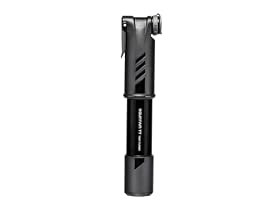
A jersey-pocket mini pump should be small enough to carry comfortably but capable of inflating your tire to a rideable pressure. Compare packed size, weight, valve compatibility, pumping volume, and whether you need a pressure gauge.
Mini pump for a jersey pocket
The best mini pump for a jersey pocket is compact, light, and compatible with your bike’s valve type. Before buying, check the pump’s packed length and weight, how it connects to Presta or Schrader valves, and whether its pressure and volume are appropriate for your tires. A very small pump is easy to carry, but it may require more strokes to inflate a completely flat tire.
What to look for in a pocket-sized mini pump
Packed size and weight
Measure the space in the jersey pocket where you plan to carry the pump, especially if you also carry a phone, spare tube, tire levers, and a multitool. Product dimensions may describe the pump in its shortest position, so check whether the listed length includes a hose, handle, or valve head.
Weight matters more on long rides and fast road setups, but a slightly heavier pump may offer a larger barrel, a more comfortable handle, or a flexible hose. Choose the smallest pump you can use without making roadside repairs unnecessarily difficult.
Valve compatibility
Most bike pumps are made for either Presta valves, Schrader valves, or both. Road and many performance bikes commonly use Presta valves; many mountain bikes, hybrids, and older bikes use Schrader valves.
Look for a clearly stated dual-valve design or a compatible adapter. Some pumps change valve modes by rearranging an internal seal, while others use a reversible head or a separate adapter. Read the instructions before your first ride so you are not trying to figure out the valve mechanism after a puncture.
Pressure and volume
A pump’s maximum pressure is not the only specification that matters. High-pressure pumps are generally better suited to narrow road tires, while higher-volume designs move more air per stroke and can be more practical for wider gravel, hybrid, or mountain-bike tires.
A small pump may technically reach the pressure listed by the manufacturer but still require substantial effort near the top of its range. Match the pump to your tire’s recommended pressure range rather than choosing solely by the largest pressure number on the package.
Hose versus direct valve connection
A flexible hose keeps your hands away from the valve and can reduce the risk of bending a Presta valve while pumping. It also gives you more freedom to position the pump.
A direct-mount pump can be shorter and lighter, but you need to keep the pump aligned with the valve. This is especially important with deep-section rims or fragile valve stems. If your tube has a short valve or your rim has limited clearance, confirm that the pump head will fit before purchasing.
Pressure gauge
A built-in gauge can help you inflate consistently, but it adds size and weight and may be harder to read on a very small pump. For emergency repairs, getting enough air to continue riding may be more important than measuring pressure precisely.
If you regularly adjust pressure for road, gravel, or mountain-bike riding, a separate accurate gauge at home can be more useful than a tiny gauge on the pump. A pocket pump with no gauge can still be a sensible choice for carrying on every ride.
How to choose by riding style
Road riding
Prioritize a compact shape, low weight, Presta compatibility, and a design intended for higher-pressure tires. A narrow barrel may take more strokes, but it can be easier to carry in a jersey pocket. A hose is helpful if your road bike uses delicate or extended Presta valves.
If you ride far from support or use high-pressure tires, consider whether the pump can inflate a replacement tube enough to ride home. Do not rely only on the advertised maximum pressure; look for a pump whose intended use matches your tire size and pressure.
Gravel and hybrid riding
A pump with a little more air volume per stroke may be more practical for wider tires. It should still fit securely in the pocket without catching on clothing or making the pocket sag.
Dual-valve compatibility can be useful if you own more than one bike. Check the pump’s head design carefully, since a universal head that is difficult to lock onto the valve is less useful than a simple, reliable connection.
Mountain biking
Wider tires require more air, so favor a higher-volume mini pump over an ultra-small high-pressure model. A flexible hose can help when the valve is close to the ground or partly obscured by the rim and tire.
If you use tubeless tires, a standard pocket pump may not deliver enough air quickly to seat a tire bead after a major failure. Carry a tubeless plug kit and appropriate inflation backup when your route and tire setup require it. A mini pump is still useful for adding air after a slow leak or installing a tube.
Product prices and availability are accurate as of the date/time indicated and are subject to change. Any price and availability information displayed on Amazon.com at the time of purchase will apply to the purchase of this product.
Jersey-pocket mini pump versus frame-mounted pump
A pocket pump is convenient when you want to keep the bike free of mounts or move one repair kit between several bikes. It also stays with you if you leave the bike unattended.
A frame-mounted pump can be larger and more comfortable to operate, which may matter if you frequently deal with flats or ride routes where help is limited. If you choose a pocket pump, make sure it is protected from keys, tools, and other items that could press on the valve head or handle while you ride.
Product prices and availability are accurate as of the date/time indicated and are subject to change. Any price and availability information displayed on Amazon.com at the time of purchase will apply to the purchase of this product.
Before your first ride
Confirm whether your bike uses Presta or Schrader valves.
Attach the pump to an inflated tire at home and practice locking the head in place.
Check whether the valve core loosens when you remove the pump. If it does, stop and review the pump-head instructions.
Extend and lock the handle if the design uses a telescoping barrel.
Check that the pump fits in the intended pocket with your normal ride essentials.
If the pump has a gauge, compare its reading with a trusted floor-pump gauge rather than assuming all small gauges agree.
Product prices and availability are accurate as of the date/time indicated and are subject to change. Any price and availability information displayed on Amazon.com at the time of purchase will apply to the purchase of this product.
Common pocket-pump problems
The pump will not attach to the valve
Make sure the pump is set for the correct valve type. On convertible heads, the internal insert or seal may need to be reversed. On adapter-based designs, confirm that the adapter is fully seated and that the valve is open when required.
Do not force the pump onto a Presta valve. A bent or damaged valve stem may require a tube replacement rather than a different pumping technique.
Air escapes around the pump head
Check that the head is straight on the valve and that its locking lever or collar is in the correct position. Inspect the rubber seal for dirt or damage. If the head leaks on multiple tires after correct setup, replace the seal or pump head if the manufacturer offers that part.
The pump feels too slow
A compact pump naturally needs more strokes than a floor pump. Use the pump’s intended high-pressure or high-volume mode if it has one, and keep the barrel fully extended when that is part of the design.
If the pump remains impractical for your tire size, replace it with a larger mini pump rather than relying on the maximum-pressure claim alone. For repeated roadside inflation of wide tires, a frame-mounted pump may be a better fit.
The valve core comes loose
Some pump heads grip the removable valve core if they are overtightened. Disconnect the pump carefully and tighten the valve core only as directed by the tube or valve manufacturer. If the core is damaged or cannot be secured, replace the tube or valve component before riding.
Product prices and availability are accurate as of the date/time indicated and are subject to change. Any price and availability information displayed on Amazon.com at the time of purchase will apply to the purchase of this product.
Bottom line
For a jersey pocket, choose the smallest mini pump that still matches your valve type and tire width. Road riders usually benefit from a compact higher-pressure design, while gravel, hybrid, and mountain-bike riders often need more air volume. Practice using it at home, and do not treat a pocket pump as a substitute for a larger inflation system when you need to seat a tubeless tire or inflate very wide tires from completely flat.
FAQ
Will any mini pump fit in a cycling jersey pocket?
No. Check the pump’s packed length, diameter, and weight, then compare those measurements with your pocket and the rest of your ride kit. A pump that technically fits may still make the pocket uncomfortable or difficult to close.
What type of mini pump do I need for a Presta valve?
Choose a pump that explicitly supports Presta valves, either through a dedicated head, a convertible dual-valve head, or a compatible adapter. Practice attaching and removing it before carrying it on a ride.
Is a gauge necessary on a jersey-pocket pump?
Not always. A gauge can help with consistent pressure, but it adds size and weight and may be difficult to read on a compact pump. Many riders use the mini pump for emergency inflation and check exact pressure with a floor pump or separate gauge.
Can a pocket mini pump inflate a tubeless tire?
It can add air in some situations, but a small pump may not deliver the rapid air burst needed to seat a tubeless bead. For tubeless emergencies, carry the pump along with the repair equipment appropriate for your tire system.