Mountain bike tire pressure depends on your weight, tire and rim limits, and trail. Start with a conservative range, then adjust a few PSI at a time.
What PSI a mountain bike tire needs
Most mountain bike tires need somewhere around 20–30 PSI, but there isn’t one correct number for every rider and setup. Tire width, rider weight, tubes versus tubeless, and the trail all matter. Use the limits printed on your tire and specified by your rim or wheel maker, then treat any general range as a starting point.
Start with a practical pressure range {#starting-pressure}
For an average-weight adult on typical 2.2–2.4-inch mountain bike tires, a reasonable first check is about 22–25 PSI in the front and 24–28 PSI in the rear. The rear often needs a little more pressure because it carries more of the rider’s weight and is more likely to bottom out on impacts. These are starting figures, not universal targets.
Setup
Starting point for a typical adult on 2.2–2.4-inch tires
With inner tubes
About 22–25 PSI front; 24–28 PSI rear
Tubeless
About 20–23 PSI front; 22–26 PSI rear
A lighter rider, wider tire, or smooth trail may call for less pressure. A heavier rider, narrower tire, rough trail, or setup with tubes may need more. Make small changes—around 1–2 PSI at a time—and check how the bike feels. Stay within the tire and wheel manufacturers’ limits.
Product prices and availability are accurate as of the date/time indicated and are subject to change. Any price and availability information displayed on Amazon.com at the time of purchase will apply to the purchase of this product.
Adjust for your setup and trail {#adjust-for-setup}
Rider and gear weight: More total weight usually requires more pressure. Include a backpack or other gear you carry on the ride.
Tire width and casing: Wider tires can often run lower pressure than narrower ones at the same load. A supple casing may need more support than a reinforced casing.
Tubes or tubeless: Tubeless setups can often run lower pressure because there is no inner tube to pinch, but going too low can cause the tire to burp, roll, or strike the rim. With tubes, too little pressure raises the risk of pinch flats.
Terrain: Roots, rocks, and hard impacts may call for more support. Smooth, soft terrain may let you use less pressure for grip, provided the tire remains stable.
Front and rear loads: The rear commonly needs a little more pressure, but the right difference depends on your bike, riding position, and tire setup.
Product prices and availability are accurate as of the date/time indicated and are subject to change. Any price and availability information displayed on Amazon.com at the time of purchase will apply to the purchase of this product.
Check limits and measure accurately {#check-limits}
Read the pressure range on the tire sidewall and consult the wheel or rim manufacturer’s instructions. The usable limit may depend on the exact tire-and-rim combination. If you have hookless rims, confirm that the tire is approved for them and follow the wheel maker’s pressure limit; do not rely on the tire’s maximum alone.
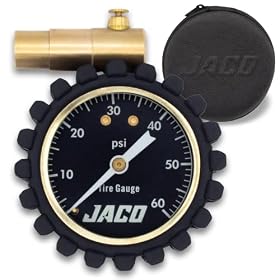
Use a pump or gauge that reads reliably at mountain-bike pressures. Some floor-pump gauges are harder to read accurately at the low end. Check pressure before a ride, since temperature changes and small leaks can alter it. A pressure gauge is more useful than judging firmness by squeezing the tire.
Fine-tune after a short ride {#fine-tune}
If the tire feels harsh and loses grip on small bumps, try lowering pressure by 1–2 PSI. If it squirms in turns, bottoms against the rim, or gets pinch flats, add pressure. For tubeless tires, a burp or rim strike is a sign to raise pressure and reassess tire support. Change one end at a time so you can tell what helped.
If you cannot get a stable reading, check the gauge against another reliable one. If pressure drops noticeably between rides, inspect for a puncture, valve leak, or damaged seal rather than repeatedly adding air. Follow the tire, rim, and bike manufacturers’ instructions if their limits or setup guidance differ from general starting ranges.
FAQ
Is 30 PSI too much for a mountain bike tire?
Not necessarily. It may suit a heavier rider, a narrower tire, a setup with tubes, or a firm trail, but it can feel harsh or reduce grip on some wider tires. Check the tire and wheel limits and adjust based on handling.
Should the front and rear mountain bike tires have the same PSI?
Not always. Many riders use slightly more pressure in the rear because it carries more load, but the best difference depends on rider position, tire setup, and terrain.
Can I run lower PSI with tubeless mountain bike tires?
Often, yes, because there is no tube to pinch. But pressure that is too low can let the tire burp or roll, or cause a rim strike. Make small adjustments and stay within the tire and wheel makers’ limits.
How often should I check mountain bike tire pressure?
Check it before rides, especially if the bike has been stored for a while or the tires are tubeless. Small pressure changes can affect grip and impact protection.