The best floor pump for a road bike should make high-pressure inflation easy, seal reliably on Presta valves, and provide a gauge you can read while standing. Here is how to compare the features that matter most.
Best floor pump for road bikes
The best floor pump for a road bike is one that works reliably with Presta valves, reaches your tires’ required pressure without excessive effort, and has a clear, usable gauge. For most riders, the most important features are a secure dual-compatible chuck, a stable base, a long hose, a readable pressure gauge, and a maximum-pressure rating comfortably above the pressure your tires require.
What to look for in a road-bike floor pump
Presta valve compatibility
Most road-bike tires use Presta valves, which are narrower than Schrader valves and have a small threaded tip that must be loosened before inflation. Choose a pump with one of these designs:
Dual-compatible head: Works with Presta and Schrader valves without needing a separate adapter.
Convertible head: Can be configured internally for either valve type.
Presta-only head: Suitable if you do not need to inflate car, mountain-bike, or other Schrader-valve tires.
A good chuck should lock onto the valve without bending the stem or leaking air. If the pump requires a removable Presta adapter, make sure the adapter is compatible with your valve and is not easy to lose.
A gauge you can actually read
A pressure gauge is especially useful for road tires because small pressure changes can affect comfort, grip, and rolling feel. Compare both the gauge’s location and its markings:
Large, high-contrast markings are easier to read while standing.
A gauge near the base may require bending down but can keep the pump’s handle lighter.
An upper-mounted gauge is easier to see during inflation, though it may add weight near the handle.
Digital gauges can offer precise numerical readings, but they need batteries and may be less convenient if the display is hard to view in bright light.
Do not choose a pump solely because its gauge shows a very high number. The useful part of the scale is the range around your normal tire pressure. A gauge that spreads common road-bike pressures across a readable portion of its dial is generally more helpful than one with a cramped high-pressure scale.
Maximum pressure rating
The pump’s maximum-pressure rating should exceed the pressure printed on your tire sidewall or specified by the tire manufacturer. That rating is a limit, not a guarantee that the pump will be comfortable or efficient at that pressure.
Road tires do not all use the same pressure. Tire width, rider weight, wheel size, tubeless or inner-tube construction, road conditions, and manufacturer guidance all affect the correct setting. Follow the tire and rim manufacturer’s limits, and never exceed the lowest applicable limit.
Pumping effort and barrel size
A floor pump with a larger barrel moves more air per stroke, which can inflate a tire quickly. A high-pressure-oriented pump may move less air per stroke but require less effort as pressure rises. For typical road-bike use, look for a pump described as suitable for high-pressure tires rather than selecting based only on barrel size.
The handle shape also matters. A broad handle gives you a more comfortable grip, while a rigid connection between the handle and barrel reduces flex. Smooth operation is preferable to a pump that feels loose or unstable when pressure increases.
Stable base and comfortable height
A wide, sturdy base helps keep the pump upright while you press down. This matters when inflating to higher pressures, when the hose resists movement, or when the pump is placed on an uneven garage floor.
Check the pump’s overall height if more than one person will use it. A handle that is too low can make inflation uncomfortable for taller users, while an excessively tall pump may be awkward for shorter users. Foot pads should grip the floor without sliding during the final strokes.
Hose length and chuck design
A longer hose lets you inflate a wheel while it is still mounted on the bike and reduces strain on the valve. It also makes it easier to work around fenders, racks, or a crowded workshop.
Look for a hose that is flexible enough to move around the wheel but not so soft that it kinks. The chuck should lock with a controlled lever and release without pulling the valve core or unscrewing the Presta valve tip.
Floor pump features worth paying for
Some features are useful, while others depend on how and where you ride.
Useful features for most road riders
A secure Presta-compatible chuck
A clear analog or digital gauge
A stable base
A comfortable handle
A hose long enough to reach a mounted wheel
Replaceable seals or a serviceable pump head, when available
Features that may be situational
A bleed button: Helpful for making small pressure adjustments, especially with high-pressure road tires.
A dual-head design: Convenient if the pump is shared with bikes using Schrader valves, but it can be bulkier than a Presta-only head.
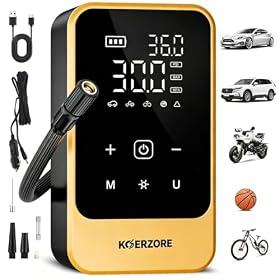
A digital gauge: Useful if precise readings are important, but check battery requirements and display visibility.
An extra-long hose: Helpful for workshop use or awkward valve positions, though it takes up more storage space.
A compact or travel-oriented design: Easier to store but may sacrifice base stability or pumping speed.
Product prices and availability are accurate as of the date/time indicated and are subject to change. Any price and availability information displayed on Amazon.com at the time of purchase will apply to the purchase of this product.
Analog versus digital gauges
An analog gauge is simple, usually visible at a glance, and does not require batteries. Its readability depends on the dial size and the spacing of its markings. A digital gauge can make exact readings easier to interpret, but it introduces batteries and electronics that may be less convenient in a cold or wet garage.
Whichever type you choose, use the same gauge consistently when setting tire pressure. Different pumps and standalone gauges may not display exactly the same reading. If you suspect a gauge is inaccurate, compare it with a known-good gauge rather than adjusting tire pressure based on guesswork.
Product prices and availability are accurate as of the date/time indicated and are subject to change. Any price and availability information displayed on Amazon.com at the time of purchase will apply to the purchase of this product.
How to choose based on your riding routine
For home workshop use
Prioritize a stable base, comfortable height, clear gauge, durable hose, and replaceable chuck seals. A larger, heavier pump is often worthwhile if you inflate several bikes or frequently adjust pressure.
For occasional road-bike maintenance
A straightforward dual-compatible floor pump with a readable analog gauge is usually sufficient. Avoid paying extra for electronic features you are unlikely to use.
For tubeless road tires
Tubeless tires can require a rapid burst of air to seat the bead. A standard floor pump may be adequate for some tire-and-rim combinations, but others may need an inflation chamber, compressor, or compatible tubeless inflator. Check the tire and rim manufacturer’s instructions before relying on a regular floor pump for seating a tire.
For riders who travel
A floor pump is more useful at home than in a jersey pocket or saddlebag. Pair it with a mini pump or CO2 inflator for roadside emergencies, but remember that CO2 is a temporary solution and should be replaced with air when practical, particularly for some tubeless setups.
How to inflate a road-bike tire correctly
Check the recommended pressure range and the maximum limits for the tire and rim.
Remove the valve cap and loosen the small Presta valve tip without removing it.
Press the pump chuck onto the valve straight and lock it.
Pump with controlled, full strokes while keeping the base stable.
Watch the gauge as you approach the target pressure.
Use the bleed button, if provided, to make small adjustments.
Unlock the chuck and remove it straight from the valve.
Tighten the Presta valve tip and reinstall the cap.
If air escapes rapidly when the chuck is attached, stop and check that the valve tip is loosened and that the chuck is set to the correct valve type. Do not force a pump head onto the valve.
When a different pump is a better choice
A floor pump is the best primary pump for efficient home inflation, but it does not replace every type of pump. A mini pump is more practical for roadside repairs. A CO2 inflator is compact and fast but provides limited inflation opportunities and requires cartridges. A pump with an inflation chamber may be a better choice if you regularly install difficult tubeless tires.
Bottom line
Choose a road-bike floor pump with a dependable Presta-compatible chuck, a readable gauge, a stable base, and a hose long enough to reach the wheel without stressing the valve. Select a maximum-pressure rating above your tire’s requirement, but pay more attention to gauge usability and pumping effort than to an unusually high advertised limit. For most riders, a durable, serviceable floor pump is a better long-term choice than a feature-heavy model with a confusing gauge or fragile valve head.
FAQ
Do road bikes need a special floor pump?
They need a pump that works with Presta valves and can comfortably reach the pressure specified for the tires. A dedicated road-bike pump is not always necessary; a reliable dual-compatible floor pump can work well.
What pressure should I use in road-bike tires?
Use the tire and rim manufacturer’s guidance, while accounting for tire width, rider weight, road surface, and whether the setup is tubeless. Never exceed the lowest applicable pressure limit.
Is a digital gauge better than an analog gauge on a bike pump?
Neither is automatically better. Digital gauges can make numerical readings easy to interpret, while analog gauges avoid batteries and can be read quickly. Choose the display that is easiest for you to read consistently.
Can a regular floor pump seat tubeless road tires?
Sometimes, but not always. Some tubeless tire and rim combinations need a rapid burst of air that a standard floor pump cannot provide. If the bead will not seat, follow the manufacturer’s instructions and consider a compatible inflation chamber or compressor.
How often should a bike floor pump be replaced?
Replace the pump when the barrel, hose, gauge, or chuck is damaged or when it can no longer hold pressure after replacing compatible seals. If replacement parts are unavailable or the pump is unsafe to operate, replacing the unit is the reasonable option.