A floor pump is usually the easiest bike pump for home use, but the right choice depends on your valve type, tire pressure, gauge readability, and available storage space.
A floor pump is usually the best bike pump for home use because its long barrel, stable base, and tall handle make inflation faster and easier than using a mini pump. Before buying, confirm that it fits your tire valve, reaches your tire’s recommended pressure, and has a gauge you can read while standing.
What to look for in a home floor pump
Valve compatibility
Most bike tires use either a Presta valve or a Schrader valve. Presta valves are narrow and common on road, gravel, and many higher-performance bikes. Schrader valves are wider and also used on cars and some bikes.
Look for a pump head that:
Supports both Presta and Schrader valves without requiring a separate adapter
Uses a clear locking lever or another secure attachment method
Does not require excessive force to attach or remove
Fits the valve stem without bending it
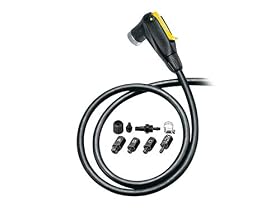
Some pump heads switch between valve types, while others use separate openings or an adjustable seal. If your household has multiple bikes, a dual-valve pump can be more convenient than a model designed for only one valve type.
A Presta adapter can also let you use a pump designed for Schrader valves, but it adds another small part to store and install. Check the pump instructions before assuming an adapter will work with its head.
Pressure range and pump type
Match the pump’s pressure capability to the maximum pressure printed on your tire sidewall and the pressure recommended by the tire or bike manufacturer. The pump’s maximum rating should be higher than the pressure you need, but never inflate a tire beyond the tire, rim, or manufacturer’s stated limit.
The pressure number alone does not tell you how comfortable a pump will be to use:
High-pressure pumps are suited to narrower road tires and make it easier to reach their higher pressures.
High-volume pumps move more air per stroke and are useful for mountain bike, fat bike, and other larger-volume tires.
General-purpose floor pumps are a practical choice when one pump must handle several types of bikes.
A pump optimized for very high pressure may require more strokes on a large-volume tire. Conversely, a high-volume pump may be slower or harder to use near the upper pressure range of a narrow road tire. Choose based on the bikes you actually maintain at home.
Gauge readability
A built-in gauge is one of the main advantages of a floor pump. Choose a gauge that you can read while the pump is standing on the floor and the hose is connected to the valve.
Consider:
Gauge size and contrast
Whether the scale includes the pressure range you use most often
Whether the gauge is mounted near the base or handle
Whether a digital display is easier for you to read than an analog dial
A gauge is useful for repeating your preferred pressure, but it may not match a separate gauge exactly. Use the same gauge consistently when setting tire pressure, and follow the tire and bike manufacturer’s guidance rather than relying only on a generic pressure number.
Base and handle stability
A wide, sturdy base helps keep the pump upright during fast strokes. A handle with enough width for both hands can be more comfortable, particularly when filling a large tire or correcting a tire that has lost most of its air.
For home use, stability is often more important than minimum weight. A very light pump may be easier to store but can feel less secure if the base shifts or the hose pulls against the valve.
Hose length and chuck design
A longer hose gives you more freedom to position the wheel and pump. It is especially useful when the bike is mounted on a repair stand or when the valve is difficult to reach because of the wheel position.
The chuck should lock onto the valve securely and release without pulling the valve core or bending the stem. When using a threaded Presta chuck, avoid overtightening. When using a lever chuck, keep the lever aligned as directed by the manufacturer.
Barrel size and effort
A larger barrel generally moves more air per stroke, which can reduce the number of strokes needed for a wide tire. A narrower barrel can make higher pressures easier to reach and may offer more control near the target pressure.
If more than one person will use the pump, consider handle height and the force required at the pressure you normally use. A pump that is technically capable of reaching the target pressure may still be unpleasant if it becomes difficult to operate near the end of inflation.
Floor pump features that matter less at home
Some features are useful but not essential for a pump that stays in a garage, workshop, or apartment:
A compact folded design is more important for travel than storage at home.
A built-in mounting bracket may be unnecessary if the pump has a permanent storage location.
A very light construction helps when carrying the pump but may not improve home use.
A dual-cylinder or specialty design is only worthwhile if it matches your tire volume and pressure needs.
Prioritize a reliable chuck, readable gauge, stable base, and appropriate pressure capability before cosmetic features or portability.
Product prices and availability are accurate as of the date/time indicated and are subject to change. Any price and availability information displayed on Amazon.com at the time of purchase will apply to the purchase of this product.
How to choose based on your bikes
Road bike or narrow high-pressure tires
Choose a pump designed to reach the pressure range recommended for your tires. A readable gauge and secure Presta-compatible chuck are particularly important. A narrow or standard-volume barrel may require more strokes than a high-volume design, but it can be easier to control at higher pressure.
Mountain bike or wide tires
A high-volume floor pump can save time when filling larger tires. If you use tubeless tires, look for a pump specifically intended to support your setup if you need a rapid burst of air to seat a tire bead. Do not assume every floor pump has an air reservoir or seating function; verify the manufacturer’s specifications.
Several bikes with different valves
A floor pump with straightforward Presta and Schrader compatibility is usually the simplest option. If the pump uses removable parts to change valve types, keep the adapter or insert with the pump so it is not lost when you need it.
Apartment or small indoor storage
Measure the available storage space before buying. Check the pump’s full height, base width, and hose storage arrangement. A tall pump may be comfortable to use but awkward to store in a narrow closet.
Product prices and availability are accurate as of the date/time indicated and are subject to change. Any price and availability information displayed on Amazon.com at the time of purchase will apply to the purchase of this product.
Using a floor pump correctly
Check the tire sidewall and bike or tire manufacturer’s guidance for an appropriate pressure.
Remove the valve cap and, for a Presta valve, loosen the small valve nut without removing it.
Rotate the wheel so the valve is accessible and supported; avoid forcing the pump head against the floor.
Attach and lock the chuck according to the pump instructions.
Pump with controlled strokes while watching the gauge.
Stop before exceeding the tire, rim, or manufacturer’s pressure limit.
Release the chuck carefully, retighten the Presta valve nut if applicable, and replace the valve cap.
If the pump handle becomes unusually hard to move, stop rather than forcing it. Recheck the valve setting and confirm that the chuck is attached correctly.
Product prices and availability are accurate as of the date/time indicated and are subject to change. Any price and availability information displayed on Amazon.com at the time of purchase will apply to the purchase of this product.
Common problems with a home floor pump
The pump will not add air
Check that the pump head is set for the correct valve type and fully locked. On a Presta valve, make sure the small tip has been loosened. On a Schrader valve, inspect the chuck for a bent or damaged internal pin.
Air escapes around the valve
The chuck may be incorrectly configured, insufficiently locked, or worn. Remove it and reconnect it carefully. If air still leaks, the chuck seal, valve core, or valve stem may need attention. Avoid repeatedly bending a loose Presta stem.
The gauge moves but the tire stays soft
A gauge reading can reflect pressure inside the pump hose rather than successful inflation if the chuck is not sealing correctly. Check the connection first, then inspect the tire for a puncture or other leak.
The handle is difficult to push
Some resistance is normal as pressure rises, but excessive resistance can indicate the wrong pump type, a blocked valve, a damaged chuck, or a pressure level beyond the pump’s practical range. Stop and check the tire and pump specifications instead of forcing the handle.
The pump base slips
Place it on a firm, level surface and make sure the feet are clean. If the base or hinge is cracked, unstable, or visibly damaged, replace the pump rather than continuing to use it.
When to replace the pump
A replacement is reasonable when the hose has cracked, the chuck no longer seals, the gauge is damaged or unreliable, or the base and handle have become unstable. If the manufacturer sells a compatible hose, chuck, seal, or gauge replacement, repairing the pump may be practical.
Replace the entire pump when the barrel, shaft, base, or body is damaged, when compatible parts are unavailable, or when the pump no longer suits your tire type. For a home setup, a dependable floor pump is generally more useful than relying on a mini pump for routine inflation.
FAQ
What type of floor pump is best for home bike use?
Choose a stable floor pump with a readable gauge, a secure chuck that fits your valve type, and a pressure range suited to your tires. A dual-valve model is convenient if your household bikes use both Presta and Schrader valves.
Can a floor pump inflate both Presta and Schrader valves?
Many floor pumps support both valve types, but the head design varies. Confirm the manufacturer’s instructions before buying. Some pumps switch settings, while others use separate openings or require a specific adapter.
Is a high-pressure or high-volume floor pump better?
High-pressure pumps are better suited to narrow road tires, while high-volume pumps fill wide mountain and fat bike tires with fewer strokes. If you maintain different types of bikes, a general-purpose pump that covers both pressure and volume needs is often the most practical choice.
How accurate does a bike pump gauge need to be?
The gauge should be readable and consistent enough to help you repeat your normal tire pressure. Gauge readings can vary between pumps, so follow the tire and bike manufacturer’s guidance and use the same gauge when possible.
Can I use a floor pump for tubeless tires?
Some floor pumps are designed to help seat tubeless tire beads, but ordinary floor pumps may not deliver air quickly enough. Check the manufacturer’s specifications to see whether the pump includes a reservoir or tubeless-seating function.