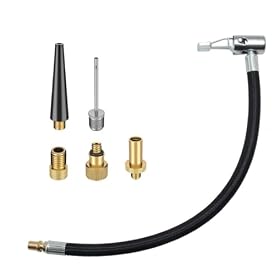
A cracked bike pump hose near the chuck usually comes from repeated bending, twisting, heat, age, or stress from the valve connection. Inspect the damage, check for air leaks, and replace the hose or pump if the crack affects pressure or cannot be securely repaired.
Pump hose cracking at the chuck
A bike pump hose that is cracking at the chuck can leak air, make inflation difficult, or fail completely under pressure. The most common causes are repeated bending at the connection, twisting the hose while attaching the chuck, exposure to heat or sunlight, and age-related rubber deterioration. Because the hose carries pressurized air, replacement is usually safer and more reliable than trying to seal a serious crack with tape.
Stop using the pump if the crack is growing
Before troubleshooting, release any pressure in the hose and inspect the damaged area. Do not continue inflating a tire if the hose has a split, bulge, exposed inner layer, or loose connection. A hose can separate from the chuck unexpectedly, and a temporary wrap may not hold at normal pump pressure.
Small surface lines may be cosmetic, but a crack that opens when you bend the hose, produces a hissing sound, or prevents the tire from reaching pressure is a functional failure.
Check the hose and chuck connection
Start at the chuck and work back along the hose:
Look for a split or cut. Flex the hose gently. If the crack opens, the outer jacket is no longer protecting the hose properly.
Check for a loose ferrule or collar. The fitting at the chuck should not wobble or pull away from the hose.
Inspect for kinks. A sharp bend directly behind the chuck can concentrate stress in one short section.
Listen for escaping air. Pressurize the hose briefly without connecting it to a tire, if the pump design allows this safely. Stop if the hose expands or appears ready to separate.
Check the chuck seal. A worn rubber gasket inside the chuck can leak and make the hose area appear to be the problem.
If the hose is cracked through the wall or the fitting is pulling out, replace the hose assembly or pump rather than relying on adhesive or electrical tape.
Product prices and availability are accurate as of the date/time indicated and are subject to change. Any price and availability information displayed on Amazon.com at the time of purchase will apply to the purchase of this product.
Why hoses crack near the chuck
The section next to the chuck flexes every time you attach the pump to a valve. It can deteriorate faster when:
The hose is bent sharply while the pump is in use.
The chuck is twisted instead of held straight on the valve.
The pump is stored with the hose tightly wrapped around the barrel.
The hose is dragged, pinched, or caught under the pump base.
The pump is left in a hot vehicle, direct sunlight, or freezing conditions.
Oil, solvent, or another incompatible chemical contacts the hose.
The hose has simply become brittle with age.
Avoid applying household lubricants, heat-shrink tubing, or solvent-based glue unless the pump manufacturer specifically approves the material. Some products soften or damage rubber and plastic hose compounds.
Product prices and availability are accurate as of the date/time indicated and are subject to change. Any price and availability information displayed on Amazon.com at the time of purchase will apply to the purchase of this product.
Can a cracked pump hose be repaired?
A hose can sometimes be replaced if the pump uses a separate, serviceable hose assembly and the replacement is made for that pump. Compatibility depends on the hose length, end fittings, chuck design, and how the hose attaches to the pump body.
A short section of hose should not be cut out and rejoined unless the manufacturer provides a proper repair method and rated fittings. A glued or taped joint may leak or fail when the pump is used at higher pressure.
If the crack is only a shallow mark in a thick protective sleeve, check whether the actual pressure hose underneath is intact. If you are unsure, treat the hose as damaged and replace the affected assembly.
Valve adapter for compatibility after hose replacement
Product prices and availability are accurate as of the date/time indicated and are subject to change. Any price and availability information displayed on Amazon.com at the time of purchase will apply to the purchase of this product.
Replace the hose or replace the whole pump?
A replacement hose makes sense when:
The pump body, piston, base, and gauge still work correctly.
The manufacturer offers a compatible hose or chuck assembly.
The hose attaches with a removable fitting.
The replacement part costs and installs reasonably compared with a new pump.
Replacing the whole pump is usually more practical when:
The hose is permanently molded or crimped into the pump.
The chuck, gauge, or pump barrel is also worn.
No compatible replacement hose is available.
The pump has developed multiple air leaks.
The hose has failed after extensive use and the pump is difficult to operate.
Choose a replacement based on the pump's valve compatibility—Presta, Schrader, or dual valve—as well as the hose connection and pressure range specified by the manufacturer. A Presta adapter can help with valve compatibility, but it will not repair a cracked hose or failing chuck seal.
Prevent the next hose failure
To reduce stress near the chuck:
Keep the hose in a broad loop rather than a tight coil.
Hold the chuck straight while attaching and removing it.
Do not use the hose to pull or reposition the pump.
Store the pump indoors, away from direct sunlight and extreme heat.
Keep the hose away from sharp edges and the pump's moving parts.
Follow the manufacturer's instructions for hose storage and replacement.
Inspect the hose before long rides or high-pressure inflation.
If the hose suddenly bursts, the chuck will no longer seal, or the pump cannot build pressure after a replacement hose is installed, stop using it. For a pump with an unusual fitting or a pressurized failure that you cannot identify, consult the manufacturer or a qualified bicycle mechanic.
FAQ
Can I use electrical tape on a cracked bike pump hose?
Electrical tape may temporarily cover a superficial mark, but it is not a dependable pressure repair. If the crack opens, leaks, or reaches the inner hose, replace the hose assembly or pump.
Why does a bike pump hose crack near the chuck?
That area flexes and twists repeatedly during valve connection. Tight storage coils, sharp bends, heat, sunlight, chemicals, and age can accelerate cracking.
Can I replace only the hose on a bike pump?
Sometimes. Check whether the hose is removable and whether the manufacturer offers a compatible replacement. The hose length, fittings, chuck, and connection to the pump must match.
Is a cracked pump hose dangerous?
It can fail under pressure, leak, or detach from the chuck. Do not use a hose with a deep crack, bulge, exposed inner layer, or loose fitting.