The easiest choice for a family with mixed valve types is usually a floor pump with a reliable dual-valve head that works with both Schrader and Presta valves. A separate Presta adapter can provide a useful backup, but it should not be the primary solution if several bikes use different valves.
A family with mixed valve types will usually do best with a floor pump that supports both Schrader and Presta valves without requiring a head change. Look for a secure, easy-to-use chuck, a readable pressure gauge, and a pressure range suitable for your bikes. Keep a few inexpensive Presta adapters as backups, especially if someone may need to use a car-station inflator or another Schrader-only pump.
The best setup for most families
Choose a full-size floor pump with:
A dual-valve head or a clearly labeled reversible head
Compatibility with both Schrader and Presta valves
A locking lever that holds the chuck in place
A pressure gauge that is easy for different family members to read
A stable base and a comfortable handle
A pressure range appropriate for the tires you own
A floor pump is generally easier and faster than a mini pump for routine inflation at home. It also gives better leverage, which matters when a child, occasional rider, or anyone with limited hand strength needs to inflate a tire.
How to handle Schrader and Presta valves
Schrader valves
Schrader valves are wider and commonly used on mountain bikes, many hybrid bikes, kids' bikes, and vehicles. A compatible pump head normally attaches directly without an adapter.
Presta valves
Presta valves are narrower and common on road bikes and many performance-oriented bikes. Before attaching the pump, remove the small valve cap and unscrew the tip of the valve core slightly. Press the tip briefly to confirm that the valve is free, then attach the pump chuck straight onto the valve.
Do not force a pump head onto a Presta valve. If the chuck does not fit, check whether the pump head is set for the correct valve type or whether its internal seal needs to be reversed according to the manufacturer’s instructions.
Mixed-use pump heads
A pump marketed as dual-valve may use one opening that automatically fits both valve types, or it may use a reversible insert. Both designs can work well. The important decision is whether the head is simple enough that different family members can use it correctly.
A pump requiring a small internal insert to be flipped can still be a good choice, but label the two settings or keep the instructions nearby. If the family frequently switches between valves, an automatic or clearly marked head may reduce mistakes.
Product prices and availability are accurate as of the date/time indicated and are subject to change. Any price and availability information displayed on Amazon.com at the time of purchase will apply to the purchase of this product.
Why a Presta adapter is useful—but not a complete solution
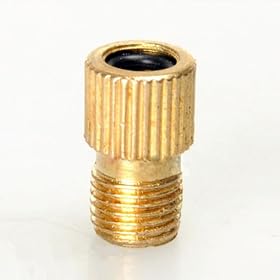
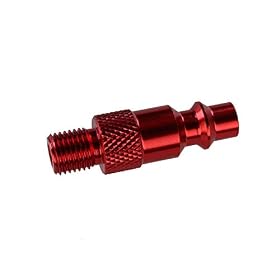
A Presta-to-Schrader adapter lets a Presta valve connect to a Schrader-only pump or inflator. It is small, inexpensive, and useful as an emergency spare. However, adapters are less convenient for regular home use because they add another part that can be misplaced.
Use adapters as a backup when:
A bike must be inflated away from home
A family vehicle has a Schrader-only inflator
You want compatibility with a public air pump
A second pump in the household supports only Schrader valves
For the main household pump, direct support for both valve types is usually more convenient.
Product prices and availability are accurate as of the date/time indicated and are subject to change. Any price and availability information displayed on Amazon.com at the time of purchase will apply to the purchase of this product.
Match the pump to your tire pressures
Valve compatibility is only half the decision. The pump must also suit the pressures required by your tires.
Check the pressure range printed on each tire sidewall and compare it with the pump’s stated operating range. Do not assume that a pump suitable for a high-pressure road tire is automatically ideal for a wide, low-pressure mountain-bike tire, or vice versa.
A readable gauge is especially valuable when several people maintain different bikes. An analog gauge is simple and does not require batteries. A digital gauge may be easier to read for some users, but it adds an electronic component that may need batteries or protection from moisture.
The gauge does not need to be perfectly precise for ordinary inflation, but it should be easy to read and positioned where the person pumping can see it without bending awkwardly.
Product prices and availability are accurate as of the date/time indicated and are subject to change. Any price and availability information displayed on Amazon.com at the time of purchase will apply to the purchase of this product.
Important features for family use
A secure chuck
A chuck that leaks or pops off makes valve changes frustrating. Look for a locking lever that engages smoothly and does not require excessive force. The hose should have enough length to reach the valve while the bike is stable.
A stable base
A wide, sturdy base helps prevent the pump from tipping. This is useful when children or inexperienced riders are inflating their own tires.
A durable hose connection
The hose connection and pump head receive frequent handling. Avoid twisting the hose sharply at the valve, and store the pump where the hose will not be crushed or kinked.
A pressure-release button
Some pump heads include a small button for releasing pressure from the hose or making fine adjustments. This can be useful, but it is not essential. Make sure family members know that releasing air from the tire itself can lower pressure quickly.
A manageable size
A full-size floor pump is usually best for home use. If the pump must also travel on every ride, consider pairing it with a compact mini pump rather than sacrificing home convenience for a single undersized pump.
Product prices and availability are accurate as of the date/time indicated and are subject to change. Any price and availability information displayed on Amazon.com at the time of purchase will apply to the purchase of this product.
A practical family setup
For most households, this combination covers the common situations:
Primary home pump: A dual-valve floor pump with a gauge.
Backup: One or two Presta adapters stored with the pump or in a roadside repair kit.
Travel pump: A mini pump or CO2 inflator if riders regularly travel beyond easy access to a repair shop.
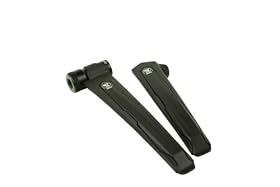
A CO2 inflator is fast and compact, but it uses disposable cartridges and provides less opportunity for careful pressure adjustment. It is best viewed as an emergency or ride-support tool, not necessarily the family’s main home pump.
Common setup mistakes
The pump works on one bike but not another
Check the valve type first. The pump head may need to be switched to its other setting, or a Presta valve may need its tip loosened before the chuck is attached.
Air escapes around a Presta valve
Remove the chuck, confirm that the valve core is open, and reconnect the chuck straight. Inspect the pump head seal if air still leaks. Do not overtighten the small Presta valve tip.
The pump gauge moves but the tire does not inflate
The chuck may not be locked fully, the valve may be damaged, or the pump head may be set for the wrong valve type. Check the connection before pumping harder.
The pump will not fit a deep-rim valve
Some wheels use extra-long valve stems or require more reach through the rim. Confirm that the pump chuck and hose can reach the valve without bending it. A valve extender may be appropriate only if it matches the valve system and is installed according to its instructions.
The pump is difficult for children to use
A smaller rider may struggle with a tall pump, stiff locking lever, or high handle force. Use a stable floor pump, supervise the first attempts, and have the rider stop if the bike moves or the valve begins bending.
When to buy a different pump
Replace or supplement the pump if its head repeatedly leaks, the gauge is unreadable, the hose is cracked, or it cannot reach the pressure range required by your bikes. If the pump body or handle is damaged, replacement is usually safer than trying to repair a pressurized component with improvised parts.
If the household bikes are split between valve types and the current pump requires frequent disassembly or confusing adjustments, a dual-valve floor pump is the simplest upgrade. Add a Presta adapter for backup use rather than relying on adapters for every inflation.
FAQ
What type of bike pump is best for both Presta and Schrader valves?
A floor pump with a dual-valve head is usually the most convenient choice. Check whether the head supports both valves directly or uses a reversible insert, and follow the manufacturer’s setup instructions.
Do I need a Presta adapter if my pump supports both valve types?
Not for normal home inflation. An adapter is still useful as a compact backup for Schrader-only pumps, public air stations, or vehicle inflators.
Is a floor pump better than a mini pump for a family?
For routine inflation at home, yes. A floor pump is generally faster and easier to operate. A mini pump is more useful as a portable backup for rides.
How can I tell whether a bike uses a Presta or Schrader valve?
Schrader valves are wider and look similar to vehicle tire valves. Presta valves are narrower and have a small threaded tip that must be loosened before inflation.
Why does my pump lose air when I attach it to a Presta valve?
The valve tip may still be closed, the pump head may be set incorrectly, or the chuck may not be seated straight. Remove the chuck, check the valve and pump-head setting, and reconnect without forcing it.