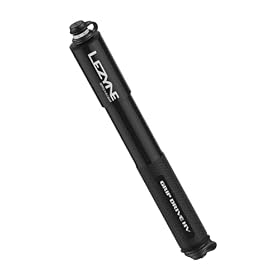
CO2 inflators are the fastest way to refill a gravel tire, while mini pumps provide unlimited attempts. The better choice depends on how remote the ride is, how many flats you might need to fix, and whether you prioritize speed or self-sufficiency.
A CO2 inflator is faster and smaller than a mini pump, but it gives you a limited number of tire refills. A mini pump takes longer and requires more effort, yet it can keep working through multiple punctures as long as you have time and energy. For many gravel rides, carrying a mini pump plus one or more CO2 cartridges is the most dependable setup.
CO2 inflator vs. mini pump at a glance
Factor
CO2 inflator
Mini pump
Speed
Very fast
Slower, especially with a large gravel tire
Number of refills
Limited by cartridge supply
Unlimited while you can keep pumping
Pack size
Usually very compact
Compact, but often longer or heavier
Effort
Minimal physical effort
More effort and time
Pressure control
Less forgiving; air enters quickly
Easier to add air gradually
Cold-weather handling
Cartridge and valve can become cold during use
No cartridge-cooling issue
Best use
Fast roadside inflation
Reliable backup and repeated repairs
Choose CO2 when speed matters most
A CO2 inflator can refill a repaired gravel tire in a few seconds. That is useful in cold rain, strong wind, fading daylight, or group rides where you want to minimize the time spent stopped.
CO2 is also attractive when space is tight. The inflator head and cartridge can fit in a small saddle bag or jersey pocket, although the cartridge itself is consumed after use.
CO2 makes the most sense when:
You normally have a low risk of repeated flats.
You want the quickest possible roadside repair.
You already carry a separate method for checking or adjusting pressure.
You are comfortable estimating pressure or using an inflator with controlled release.
You carry enough cartridges for the number of tires and repairs you may need.
CO2 is less convenient if you need to make several attempts. A failed plug, a pinched tube, a second puncture, or a slow leak can use more cartridges than expected.
Product prices and availability are accurate as of the date/time indicated and are subject to change. Any price and availability information displayed on Amazon.com at the time of purchase will apply to the purchase of this product.
Choose a mini pump when reliability matters most
A mini pump does not run out of air. You can use it to inflate a replacement tube, reseat a tire after a repair, or add more pressure after discovering a slow leak. That makes it the safer single-pump choice for remote gravel routes.
The tradeoff is time and effort. Gravel tires generally hold more air than narrow road tires, so a small pump may require many strokes. A pump designed primarily for high-pressure road tires may also be inefficient on a high-volume gravel tire.
A mini pump is the better primary option when:
Your route is remote or far from assistance.
You could reasonably experience more than one flat.
You do not want to depend on disposable cartridges.
You need to control pressure gradually.
You want one inflation tool that can be reused on every ride.
Product prices and availability are accurate as of the date/time indicated and are subject to change. Any price and availability information displayed on Amazon.com at the time of purchase will apply to the purchase of this product.
Gravel-tire specifications that affect the decision
Volume matters more than maximum pressure
For most gravel repairs, the pump's air volume per stroke is more important than an extremely high maximum-pressure rating. A high-volume mini pump moves more air with each stroke and is generally more practical for filling a gravel tire.
A compact high-pressure pump can still work, but it may take longer. Check the manufacturer's intended use rather than choosing solely by the largest pressure number on the package.
Check pressure compatibility
Your pump or inflator should be compatible with the pressure range required by your tires and rims. Do not exceed the tire or rim limits printed by their manufacturers. Tubeless setups may require a rapid burst of air to seat the bead, and a basic mini pump may not provide that burst reliably.
For normal top-offs, gradual inflation is usually easier with a mini pump. CO2 can fill a tire quickly, so stop and check the pressure before adding more whenever possible.
Match the valve type
Most gravel bikes use Presta valves, but confirm before buying. Some inflators and mini pumps support both Presta and Schrader valves through a reversible head, removable insert, or adapter. Others are Presta-only.
If your pump uses a threaded CO2 connection, verify that the cartridge and inflator head use the same thread standard. Do not force a cartridge or valve connection that does not fit correctly.
Product prices and availability are accurate as of the date/time indicated and are subject to change. Any price and availability information displayed on Amazon.com at the time of purchase will apply to the purchase of this product.
CO2 limitations worth planning for
Cartridges are consumable
A CO2 inflator is only as useful as the cartridges you carry. Plan for the number of tires you may need to inflate, not just the number of flats you expect. A puncture that requires removing and reinflating a tire can consume a cartridge even if the repair itself is successful.
Carry cartridges in a way that prevents them from rattling against tools or being punctured. Follow the inflator manufacturer's instructions for installation and release.
CO2 can make pressure adjustment difficult
CO2 enters the tire rapidly. An inflator with a trigger or control mechanism gives you more control than a simple open-once design, but it still may be harder to fine-tune than a hand pump.
If you use CO2 in a tubeless tire, check for leaks before assuming the repair is complete. A tire that loses pressure soon after inflation may have a failed plug, damaged casing, poor bead seating, or another puncture.
The cartridge becomes cold
Rapid gas release can make the cartridge and inflator head very cold. Hold the cartridge only where the manufacturer's instructions allow, and avoid pressing bare skin against a rapidly cooling metal surface. An insulated sleeve can make handling more comfortable, but it does not replace careful use.
Product prices and availability are accurate as of the date/time indicated and are subject to change. Any price and availability information displayed on Amazon.com at the time of purchase will apply to the purchase of this product.
Mini-pump limitations worth planning for
Pump size affects roadside effort
The smallest mini pumps are easy to carry but can take longer to inflate a large-volume tire. A slightly larger frame pump or high-volume mini pump may be a better compromise if you ride tubeless gravel tires or often ride far from help.
Mounting and storage matter
A pump that is difficult to secure can be lost on rough roads. Check whether it fits your frame, bottle-cage mounts, saddle bag, or riding pack. Keep the pump protected from mud and make sure its hose or head cannot snag on moving parts.
Heat and technique
Long pumping sessions can heat the pump barrel and make the job uncomfortable. Use steady strokes, keep the pump aligned with the valve, and avoid bending the valve stem sideways. If the pump head leaks, stop and inspect the valve connection instead of continuing to pump harder.
The most dependable gravel setup
For most gravel riders, carry both tools but assign them different jobs:
Use CO2 for a quick inflation when you are confident the repair is complete.
Keep a mini pump as the backup if the cartridge does not seat correctly, the tire leaks, or you have another flat.
Carry the correct tube, tubeless plug supplies, tire levers, and a valve-core tool when appropriate.
Confirm that all tools work with your valve type before the ride.
Practice using the inflator and pump at home so you know how the head attaches and how much control it provides.
If you want to carry only one inflation tool, choose the mini pump for remote routes and uncertain repair conditions. Choose CO2 alone only when compactness and speed are more important than having unlimited refill attempts.
Troubleshooting a failed roadside inflation
The inflator or pump will not attach
Check whether the head is set for Presta or Schrader, and inspect the valve core and sealing gasket. On a Presta valve, loosen the small tip before attaching the pump head. Do not overtighten a threaded connection.
Air escapes around the valve
Remove the head and check that the valve core is present and tight enough to seal. Inspect the pump head gasket for damage. If the valve stem is loose in the tube or the tubeless valve is leaking at the rim, inflation may not hold until the valve is repaired or replaced.
The tire will not hold air
Listen and feel for escaping air around the tread, sidewall, valve, and bead. A tube may have another puncture. A tubeless plug may not have sealed, or the tire bead may not be seated. Do not continue riding on a tire that is losing pressure rapidly.
The tire is inflated but feels too hard or too soft
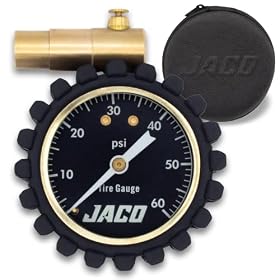
Use a pressure gauge when possible. CO2 pressure can be difficult to judge by feel, especially with tubeless tires. Stay within the tire and rim manufacturer's pressure limits, and release air carefully if the tire is overinflated.
Bottom line
CO2 is the fast option; a mini pump is the dependable option. For short, supported gravel rides, a CO2 inflator may be all you need. For long or remote rides, a mini pump protects you from running out of cartridges. The strongest all-around setup is a compact CO2 inflator for speed plus a suitable high-volume mini pump as backup.
FAQ
Is CO2 better than a mini pump for gravel riding?
CO2 is better for fast inflation, while a mini pump is better for repeated repairs and remote rides. Many gravel riders carry both, using CO2 first and the mini pump as a backup.
How many CO2 cartridges should I carry on a gravel ride?
Carry enough for the number of tires and repair attempts you might reasonably need, with extra capacity for a failed plug, second puncture, or reinflation attempt. The required cartridge size and number of fills vary by tire volume and the manufacturer's guidance.
Can I use CO2 in a tubeless gravel tire?
Yes, CO2 can be used for a tubeless gravel tire, but inflation does not prove that the repair is secure. Check for leaks around the plug, valve, and bead before riding away, and monitor pressure afterward.
What type of mini pump is best for gravel tires?
A high-volume mini pump is generally more practical than a very small high-pressure road pump because it moves more air per stroke. Confirm that it supports your valve type and the pressure range required by your tires and rims.