Head leaking after switching from Presta to Schrader
If your bike pump head leaks after switching from a Presta valve to a Schrader valve, check the head insert and rubber seal first. The wrong setup, a worn gasket, a loose hose, or a damaged Schrader valve core can all cause air loss.
A pump head that leaks after switching from Presta to Schrader is usually set up for the wrong valve type or has a displaced seal or insert. Remove the head, confirm how your pump changes between valve types, and inspect the rubber parts before replacing the pump. Do not keep pumping if the head is only partly attached; it can damage the valve or cause the hose to whip loose.
Check the pump head setup first
Bike pumps commonly use one of three designs:
Dual-sided head: One opening is for Presta and the other is for Schrader.
Reversible insert: A rubber seal and plastic insert must be removed, turned, or repositioned to change valve types.
Single opening with a selector or lever: The head must be switched to the correct valve setting.
The correct procedure varies by pump. Follow the markings on the head and the manufacturer's instructions rather than forcing the valve into the opening.
For a Schrader valve, the pump head should normally slide over the wider valve and seal around its outside. If a Presta insert or narrow rubber seal is still installed, the head may feel loose or leak heavily as soon as you start pumping.
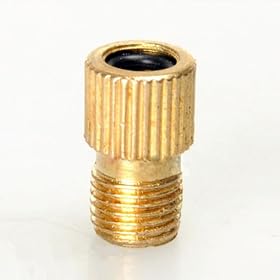
If you are using a Presta adapter on a Presta tube, remember that the adapter makes the valve externally resemble a Schrader valve. Tighten the small Presta valve nut first, screw the adapter on straight, and then attach the pump head to the adapter. A missing or cross-threaded adapter can leak at the valve even when the pump head is working correctly.
Inspect the rubber seal and insert
Remove the pump head from the tire and look inside it. Check for:
A rubber gasket that is folded, torn, hardened, or pushed out of position
A plastic insert installed backward or in the wrong orientation
Dirt, grit, or dried sealant on the sealing surface
A missing washer or loose retaining piece
A seal that stayed stuck to the valve after removing the head
Clean loose dirt with a dry cloth. Do not use sharp tools to pry out a gasket, since a small cut can create a persistent leak. If the seal is damaged or permanently deformed, install the correct replacement seal or head for that pump model.
A reversible pump head may have several small parts that look similar. Take a photo before disassembly and keep the pieces in order. Do not mix the Presta and Schrader inserts.
Product prices and availability are accurate as of the date/time indicated and are subject to change. Any price and availability information displayed on Amazon.com at the time of purchase will apply to the purchase of this product.
Make sure the head is locking correctly
Push the Schrader head fully over the valve before operating the locking lever. On many designs, the lever should move firmly into its locked position without excessive force. If the lever will not close, remove the head and check alignment instead of forcing it.
If the head leaks only while the lever is partly closed, the pump may not be clamping the correct section of the valve. A damaged lever, loose pivot, or worn internal cam can also prevent the gasket from sealing.
Test the connection with a few slow strokes. Air should enter the tire without a strong hiss around the head. Avoid holding the hose at an angle, which can pull the head sideways and open a gap around the Schrader valve.
Product prices and availability are accurate as of the date/time indicated and are subject to change. Any price and availability information displayed on Amazon.com at the time of purchase will apply to the purchase of this product.
Check the Schrader valve and valve core
A Schrader valve has a spring-loaded valve core in its center. Look for these problems:
The valve core is loose
The center pin is bent or stuck
The valve stem is bent or moving excessively
Dirt is preventing the core from closing
The valve is damaged where it meets the tube or rim
You can briefly press the center pin with a blunt object to confirm that the valve opens, but do not remove the core unless you have the proper valve-core tool and the tube or tire is designed for that service. Never use a sharp object near the valve seal.
If air leaks from the valve core after the pump head is removed, the problem is not just the pump head. A loose or damaged core may need tightening or replacement. A tube with a damaged valve stem usually needs replacement rather than repair.
Product prices and availability are accurate as of the date/time indicated and are subject to change. Any price and availability information displayed on Amazon.com at the time of purchase will apply to the purchase of this product.
Check the hose and hose connection
If the leak is not at the pump head, inspect the hose connection at both ends. Look for:
A hose that has pulled partly out of its fitting
Cracks near the pump head or pump body
A loose threaded connector
A split hose barb or missing clamp
Air escaping from the hose itself during pumping
Listen for the leak with the pump disconnected from the tire. A hose leak that appears only under pressure may be hard to see but can still be felt as air movement. Replace the hose or hose assembly if it is cracked or permanently loose. Sealant or tape is not a reliable repair for a damaged pressurized hose connection.
Check for the wrong adapter or a poor fit
A Presta-to-Schrader adapter is useful when a pump has only a Schrader opening, but it adds another sealing point. Confirm that:
The Presta valve nut is loosened enough for air to flow.
The adapter is screwed on straight and snug by hand.
The adapter's internal seal is present and undamaged.
The pump head is locked onto the adapter, not partly over the exposed Presta valve.
If the adapter leaks around its threads, replace the adapter. If it leaks where it meets the pump head, check whether the pump head requires a particular Schrader-style seal or locking position.
When to replace the seal, head, or pump
A replacement seal or insert is the reasonable next step when the pump body and hose are sound but the head gasket is worn or missing. Replace the complete pump head when the locking lever, housing, or internal threads are damaged and replacement parts are available.
Replacing the entire pump is more practical when the head is permanently molded to a cracked hose, the pump has several worn parts, or the correct replacement head is unavailable. Match the replacement to your valve types and the pump's pressure range. A pump that fits Schrader valves may still be unsuitable for your tire pressure needs.
Stop using the pump and seek professional help if the valve stem pulls away from the tube or rim, the rim valve hole is damaged, or a high-pressure tire or tubeless setup cannot hold air after the head is removed. Follow the tire, tube, rim, and pump manufacturer's pressure limits.
FAQ
Why does my pump head leak only on a Schrader valve?
The pump may still have its Presta insert or gasket in the wrong position, or the Schrader sealing rubber may be worn. A loose Schrader valve core or damaged valve stem can also leak independently of the pump head.
Can I use a Presta adapter to fix a leaking pump head?
A Presta-to-Schrader adapter can let a Schrader-only pump connect to a Presta valve, but it will not repair a worn pump seal or damaged locking mechanism. Replace the adapter if it leaks around its threads or internal seal.
Should the pump head lever be up or down?
The correct lever position depends on the pump design. In general, place the head fully over the valve first, then move the lever to the marked locked position. If it requires excessive force, remove it and check the insert and alignment.
Why does air leak after I remove the pump from the Schrader valve?
A short hiss during removal can be air escaping from the pump hose, but continued leakage from the tire points to a loose or damaged Schrader valve core, valve stem, or tube. Check the valve after the pump is completely disconnected.