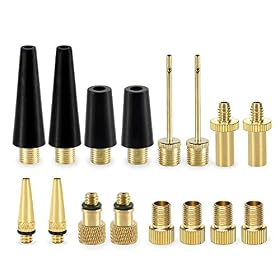
A standard bike pump with a Schrader-compatible head is the simplest choice for most kids’ bikes. Here’s what to check before buying and how to inflate the tire safely.
A pump for a kid bike with Schrader valves should connect directly to the wider car-style valve used on most children’s bikes. For home use, a small floor pump with a stable base, readable gauge, and Schrader-compatible chuck is usually the easiest option. A compact hand pump can work for storage or travel, but it generally takes more strokes and may be harder for a child to operate.
What to look for
Schrader compatibility
Schrader valves are wider and shorter than Presta valves and are commonly found on kids’ bikes, mountain bikes, and many older bicycles. Look for a pump head labeled Schrader, AV, or auto valve. Some pumps support both Schrader and Presta valves with a switchable or dual-purpose head.
A Presta-only pump will not be the right choice unless you also buy a suitable adapter. For a child’s bike that uses Schrader valves, direct Schrader compatibility is simpler and reduces the chance of losing a small adapter.
A stable floor pump for home use
A floor pump is generally the best choice when the bike is inflated at home. Its long barrel and handle can move more air per stroke than a mini pump, while the floor base helps keep the pump steady.
Useful features include:
A base wide enough to stay stable while pumping
A chuck that locks securely onto the Schrader valve
A pressure gauge that is easy to read
A hose long enough to reach the valve without awkward positioning
A handle that fits the adult or child who will operate it
A gauge is helpful, but it does not replace the pressure recommendation for the tire. Check the tire sidewall or the bike manufacturer’s instructions for the appropriate range. Do not automatically inflate a kids’ bike tire to the highest pressure printed on the sidewall; the correct pressure depends on the tire and bike setup.
A mini pump for rides and storage
A mini pump is useful if the bike needs to carry its own backup pump. Choose one that supports Schrader valves without requiring a separate part, or confirm that the included adapter will stay secure during use.
Mini pumps are compact, but they usually require more pumping effort than a floor pump. They are best for topping up a tire or handling an emergency away from home, not necessarily for routine inflation from completely flat.
CO2 inflators are an optional backup
A CO2 inflator can inflate a tire quickly, but it requires disposable cartridges and careful handling. It is usually more appropriate for adult riders who understand how much gas to release and how to secure the cartridge. For a child’s everyday bike maintenance, a conventional hand or floor pump is easier to control and reuse.
How to inflate a kids’ bike tire
Check the valve. Remove the plastic cap and confirm that the valve is Schrader-style.
Check the tire. Look for the recommended pressure range on the sidewall. Do not inflate a damaged, badly cracked, or unseated tire.
Attach the pump head. Press the Schrader chuck straight onto the valve and lock it according to the pump’s instructions.
Pump gradually. Keep the pump upright and use controlled strokes. Stop if the tire bulges, the bead moves, or air leaks heavily around the valve.
Check the pressure. Use the gauge if the pump has one, and stay within the tire maker’s recommended range.
Remove the chuck carefully. Unlock and pull it straight off, then replace the valve cap.
If the tire is completely flat, inspect the tire and tube before repeatedly adding air. A puncture, loose valve, or tire bead that has come off the rim may need repair rather than more inflation.
Product prices and availability are accurate as of the date/time indicated and are subject to change. Any price and availability information displayed on Amazon.com at the time of purchase will apply to the purchase of this product.
Floor pump or mini pump: which is better?
Choose a floor pump when:
The bike is usually serviced at home
Several family bikes need regular inflation
You want faster, easier inflation
A stable base and readable gauge are important
Choose a mini pump when:
The pump needs to fit in a backpack or bike bag
You want emergency backup on rides
Compact size matters more than speed
You are comfortable pumping manually for longer
A pump that supports both valve types can be useful for a household with multiple bikes, but it is not essential if every bike uses Schrader valves. A simple Schrader-only pump may have a less complicated head and be easier for occasional use.
Product prices and availability are accurate as of the date/time indicated and are subject to change. Any price and availability information displayed on Amazon.com at the time of purchase will apply to the purchase of this product.
Common problems and simple fixes
The pump will not attach
Confirm that the valve is not Presta, remove the valve cap, and make sure the pump head is fully seated before locking it. If the head has a selectable setting, choose Schrader or auto valve. Do not force the connector onto the valve.
Air escapes around the chuck
The chuck may not be locked, or its internal seal may be worn. Release the lever, reseat the head straight on the valve, and try again. If air still escapes from a properly attached head, the chuck seal or pump head may need replacement.
The tire stays soft after pumping
Check the pressure with the pump gauge if available, then inspect the tire for a small puncture, embedded object, or leaking valve. A tire that loses noticeable pressure between rides may need a tube repair or replacement rather than a different pump.
The gauge reading seems wrong
Check that the hose is connected and the chuck is sealed. Compare the reading with the tire maker’s recommended range and, if accuracy is important, have the pressure checked with a separate suitable gauge. Avoid relying on an unverified gauge when inflating near the tire’s maximum rating.
The tire will not hold air at all
Stop pumping if the tube leaks immediately, the tire has a visible tear, or the bead is not seated correctly. Replace or repair the tube as appropriate. If the rim, tire, or valve is damaged, ask a qualified bike mechanic to inspect it.
Product prices and availability are accurate as of the date/time indicated and are subject to change. Any price and availability information displayed on Amazon.com at the time of purchase will apply to the purchase of this product.
Bottom line
For most kids’ bikes with Schrader valves, choose a basic floor pump with direct Schrader compatibility, a stable base, and a readable gauge. Add a mini pump only if the bike needs an on-the-go backup. Always follow the tire or bike manufacturer’s pressure guidance, and treat rapid air loss or visible tire damage as a repair issue rather than a pumping problem.
FAQ
What type of pump does a kids’ bike with Schrader valves need?
It needs a pump head that supports Schrader, also called auto or AV, valves. A standard floor pump is usually the easiest option for home use, while a Schrader-compatible mini pump works for carrying on rides.
Can I use a Presta pump on a Schrader valve?
Only if the pump is designed for both valve types or you use the correct adapter. A pump with direct Schrader compatibility is usually simpler for a kids’ bike.
Does a kids’ bike need a pump with a pressure gauge?
A gauge is useful for checking pressure and avoiding underinflation or overinflation. Follow the pressure range printed on the tire or specified by the bike manufacturer rather than using the gauge alone.
Why does the tire lose air when I remove the pump?
A small hiss during chuck removal can be normal, but continuing air loss may indicate that the chuck is not sealing correctly, the valve is damaged, or the tube has a leak. Reseat the chuck and inspect the valve and tire before replacing parts.